Commodity Trading
Returning to the Commodity Trading Hub: From Students to Practitioners

In our final guest blog discussing the Liverpool Business School Commodity Trading Hub, Dina Dal explores her return to the classroom with Rime El Moutez and Sayooj Siju, this time to share their own commodities expertise from working at Gen10.
A Full Circle Moment
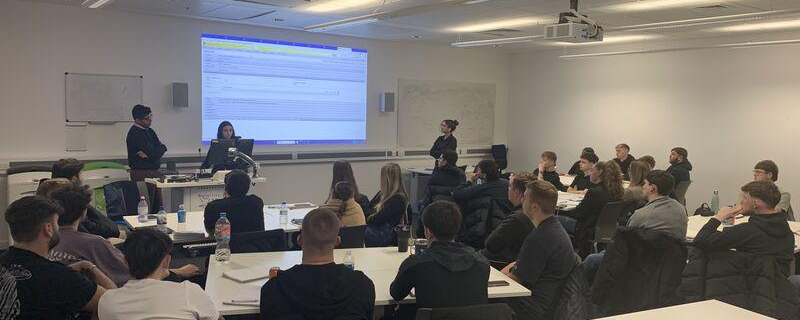
Walking back through the doors of Liverpool Business School's Commodity Trading Hub felt surreal. Just a year ago, we were LBSCTH students, eagerly absorbing everything we could about commodity trading. Last week, we returned as industry professionals, part of Gen 10, invited to present the CTRM system we now use daily in our roles.
The invitation to present to the current cohort was both an honour and a responsibility. We wanted to bridge the gap between academic learning and real-world application, showing the next generation of traders what awaits them beyond the classroom.
The Experience: Nerves, Nostalgia, and Growth
Standing in front of the room where we once sat, the emotions were complex. There was nervousness, presenting to our former mentors and eager students carried weight. But there was also pride. In just one year, we'd transitioned from theory to practice, and now we have insights worth sharing.
The most rewarding aspect was seeing the students' engagement. Their questions were sharp; their curiosity was genuine. We remembered being in their shoes, wondering how classroom concepts translated to actual trading floors. Now, we can provide those answers from firsthand experience.
The Challenges We Face
Working in a live CTRM environment comes with its own set of challenges, many of which are far removed from textbook scenarios. One of the most common challenges we face is managing client-reported issues with limited initial information.
In these situations, we must rely on a combination of technical knowledge, investigative thinking, and structured troubleshooting. We analyse system data, trace transaction flows, review configurations, and replicate scenarios in test environments to isolate the root cause. This process requires precision, patience, and a deep understanding of both the system and the client’s business logic.
Another challenge lies in the diversity of client requirements. Each organization has its own workflows, compliance standards, and risk management strategies. A configuration that works perfectly for one trading company may be completely unsuitable for another. Our role at Gen10 is therefore not just technical; it is highly analytical and consultative. We must adapt the system to reflect each client’s reality while ensuring accuracy, efficiency, and regulatory compliance.
These challenges have strengthened our ability to think critically under pressure, communicate clearly with stakeholders, and deliver practical solutions in complex trading environments. They are also what make our work dynamic, stimulating, and deeply rewarding.
The Bridge Between Education and Industry
Our presentation aimed to demonstrate the practical tools that support modern commodity trading. While LBSCTH provides excellent foundational knowledge, seeing an actual Commodity Management System in action offers students a glimpse into their future work environment.
We emphasized that success in commodity trading isn't just about market knowledge, it's about mastering the systems and processes that ensure accurate, compliant, and profitable operations.
The System: A Comprehensive Commodity Management Platform
Now, let me walk you through the key functionalities we demonstrated - the same tools our clients rely on every day.
1. Dashboards: Your Command Centre
The dashboard serves as the nerve centre of trading operations, providing at-a-glance visibility into:
- Active contracts and their status
- Pending tasks and approaching deadlines
- Market positions and exposure
- Cash flow projections
- Shipments’ ETAs/ETDs
For traders managing multiple contracts simultaneously, this centralised view is invaluable. It transforms what could be overwhelming complexity into actionable intelligence.
2. Recording Contracts
The contract recording functionality is where every trade begins. The system handles both purchase and sale contracts with remarkable detail.
Contracts: Capturing Every Critical Detail
When recording a purchase or sale contract, the system ensures nothing falls through the cracks and all agreed terms for the deal are recorded:
Commodity Specifications: The system records the commodity being traded, including specific details such as its grade, which is critical information since price variations between grades can significantly impact profitability. Whether you're dealing with Grade A Brazilian coffee or specific wheat protein content, precision here is non-negotiable.
Scheduling and Logistics: The system captures scheduled dates for each phase of the transaction—from contract execution to expected delivery. It integrates Incoterms that define precisely when responsibility and risk transfer from seller to buyer, and ensures everyone understands their obligations.
Price Fixation Mechanisms: Perhaps one of the most sophisticated features is how the system handles pricing. Not all commodity purchases have fixed prices at contract signing. The system accommodates various pricing mechanisms.
3. Shipment Management
Once a contract is agreed upon, the real complexity begins. This is where shipment management plays a critical role in the Commodity Management System, bridging the gap between contractual agreement and physical delivery.
The Shipment module allows traders and operations teams to track the entire logistical journey of the commodity, from its point of origin to its final destination. It captures all essential shipment data, including:
- Loading and discharge ports
- Vessel or container details
- Quantity shipped and remaining balance
- Loading and delivery dates
- Freight costs and related expenses
- Shipping documentation such as Bills of Lading
This level of visibility is essential for managing risk, avoiding delays, and ensuring that every party involved in the transaction is aligned. A late shipment or incorrect quantity recording can have significant financial and contractual consequences, which is why accuracy at this stage is critical.
The system also links shipments directly to the corresponding contracts. This means that every movement of goods is reflected in the trading position, inventory levels, and financial exposure reports in real time. As shipments are executed, the system automatically updates balances, outstanding quantities, and logistics status, giving traders and operations teams complete control and transparency.
From a practical perspective, this is one of the most powerful learning moments for students seeing the system for the first time. It demonstrates how commodity trading is not just about buying and selling on a screen, it is about managing physical goods, coordinating international logistics, and ensuring that complex global operations run smoothly.
At Gen10, shipment-related issues are among the most frequent and the most business-critical requests we handle. A small data error at this stage can ripple into pricing, invoicing, and reporting inaccuracies. This is why our role in configuring and supporting shipment data is essential to maintaining the integrity of the entire trading process.
Insightful Questions That Impressed Us
The students from LBSCTH came prepared with thoughtful questions that caught us off guard in the best way possible. They weren't asking basic questions - they were diving into the specifics of how certain columns function, why particular logic was implemented, and how different scenarios play out. These are the same types of detailed questions our clients typically ask, which shows they were genuinely trying to understand the system at a practical level.
What really stood out was how quickly the students grasped trade flows - understanding where a trade starts, how it moves through various stages, and where it ultimately ends. When we walked them through a physical trade scenario, they didn't just follow along passively. They were actively connecting the pieces, visualizing how the process unfolds in real trading situations, and asking smart follow-up questions that showed genuine comprehension.
These students demonstrated they could think through complex trading scenarios and understand both the technical mechanics and the business reasoning behind them.
Looking Forward
Returning to LBSCTH as practitioners reinforced something we already knew: the program prepares students exceptionally well for the realities of commodity trading. Seeing their engagement, curiosity, and quick grasp of complex systems reminded us of our own journey just a year ago. To the current cohort: the transition from student to professional happens faster than you think. Stay curious, ask detailed questions, and embrace the complexity, because before you know it, you'll be the ones standing at the front of the room, sharing your own experiences with the next generation of traders.
The Commodity Trading Hub relies on the goodwill of experienced commodity traders and related professionals to deliver guest lectures, workshops and seminars to students interested in careers in commodities. If you would like to contribute to this valuable initiative, you can get in touch with Mat Halsall on LinkedIn or by email at Mat@mlh-academy.com.